 English
 Español
 Português
 русский
 Français
 日本語
日本語 Deutsch
 tiếng Việt
 Italiano
 Nederlands
 ภาษาไทย
 Polski
 한국어
한국어 Svenska
 magyar
 Malay
Malay বাংলা ভাষার
 Dansk
Dansk Suomi
Suomi हिन्दी

How Does Single Minute Exchange of Dies Improve Manufacturing Efficiency?
Article Summary
Single Minute Exchange of Dies (SMED) is a manufacturing methodology designed to dramatically reduce equipment changeover time. In modern production environments where flexibility, efficiency, and cost control are critical, SMED enables companies to switch tooling or dies in minutes rather than hours. This article explains how Single Minute Exchange of Dies works, why it matters to manufacturers, and how companies can implement it effectively. It also explores common challenges, key process steps, equipment requirements, and practical benefits for industries such as stamping, injection molding, and metal forming.
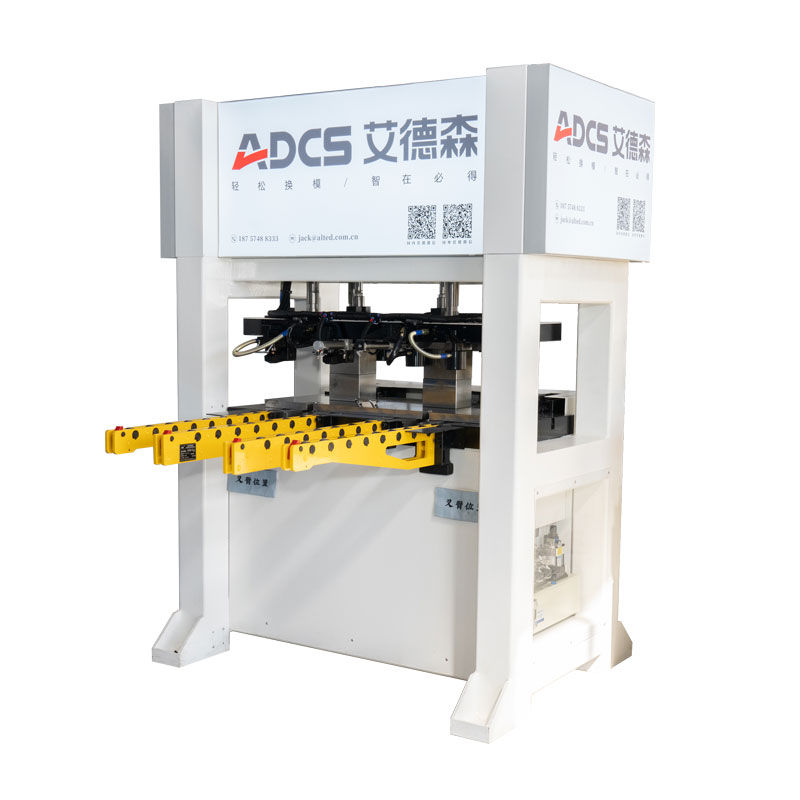
Table of Contents
- Introduction to Single Minute Exchange of Dies
- Why Fast Die Change Matters in Manufacturing
- How the Single Minute Exchange of Dies Method Works
- Core Components of an Effective SMED System
- Typical SMED Equipment and Technical Parameters
- Step-by-Step Implementation Strategy
- Common Industry Applications
- Operational Benefits for Manufacturers
- Frequently Asked Questions
- Conclusion
Introduction to Single Minute Exchange of Dies
Manufacturing companies continuously seek ways to increase production flexibility while maintaining consistent product quality. One proven approach is the Single Minute Exchange of Dies method, often abbreviated as SMED. The concept focuses on reducing machine changeover time to less than ten minutes, allowing production lines to switch from one product to another quickly and efficiently.
Traditional die replacement procedures often involve multiple manual steps, complex alignment processes, and extended machine downtime. This leads to lost productivity and higher operational costs. By contrast, SMED reorganizes and optimizes these procedures so that changeovers become faster, safer, and more predictable.
Modern manufacturers increasingly rely on automated die clamping systems, quick die change carts, and hydraulic positioning mechanisms to support SMED practices. Companies such as ADCS develop specialized solutions designed to streamline these processes and support high-efficiency manufacturing environments.
Why Fast Die Change Matters in Manufacturing
In many industries, production demand frequently changes due to varying customer requirements. Long changeover times reduce equipment availability and limit production flexibility. Fast die exchange offers several critical advantages.
- Reduced machine downtime
- Improved production flexibility
- Lower inventory requirements
- Faster response to customer orders
- Higher equipment utilization rates
Without an efficient changeover system, manufacturers may need to run large production batches simply to compensate for setup time. This creates excess inventory and reduces the ability to respond to market demand. Implementing SMED helps solve this problem by making small-batch production economically viable.
How the Single Minute Exchange of Dies Method Works
The SMED methodology focuses on separating internal and external setup tasks. Internal tasks require the machine to stop, while external tasks can be completed while the machine is still running. By converting as many internal tasks as possible into external tasks, overall changeover time is drastically reduced.
The typical workflow includes several optimization stages.
- Analyze the existing changeover process
- Identify internal and external setup steps
- Convert internal tasks into external tasks
- Simplify tool alignment and positioning
- Introduce quick locking and hydraulic clamping systems
- Standardize procedures and training
For example, preparing the next die, checking bolts, and preheating equipment can be completed while the machine continues running. Once the current production cycle finishes, operators only need to perform minimal actions to complete the changeover.
Core Components of an Effective SMED System
Successful SMED implementation requires the right combination of equipment design, workflow optimization, and operator training. Several key components are typically involved.
- Quick die clamping systems
- Hydraulic die lifting and positioning units
- Die storage racks and transfer carts
- Automated locking mechanisms
- Standardized die alignment guides
Advanced SMED systems developed by companies such as ADCS integrate these elements into a coordinated setup solution. These systems help eliminate manual adjustments and reduce the risk of misalignment or operator error.
Typical SMED Equipment and Technical Parameters
| Parameter | Description |
| Die Change Time | Typically reduced to under 10 minutes depending on machine type |
| Clamping Method | Hydraulic or mechanical quick clamping system |
| Positioning Accuracy | High precision guide pins and locating blocks |
| Automation Level | Manual, semi-automatic, or fully automated options |
| Applicable Machines | Stamping presses, injection molding machines, forming machines |
| Safety Features | Locking sensors, pressure monitoring, emergency stop systems |
These parameters may vary depending on the specific production environment. Custom solutions are often designed to match the requirements of each factory.
Step-by-Step Implementation Strategy
Adopting SMED requires a structured implementation plan to ensure long-term success. Manufacturers typically follow a systematic improvement process.
- Observe the current die change procedure
- Record each step and measure time consumption
- Identify bottlenecks and unnecessary movements
- Redesign the workflow using SMED principles
- Introduce quick-change tooling systems
- Train operators and standardize procedures
- Monitor performance and refine the process
Continuous improvement is essential. Even after implementing SMED, companies often discover additional opportunities to reduce changeover time further.
Common Industry Applications
The Single Minute Exchange of Dies concept is widely used across multiple manufacturing sectors where frequent tool changes occur.
- Automotive parts stamping
- Metal sheet forming
- Plastic injection molding
- Electronics component manufacturing
- Household appliance production
In automotive manufacturing, for example, stamping plants must switch dies frequently to produce different body panels. Without SMED systems, these changeovers could take hours, significantly affecting production schedules.
Operational Benefits for Manufacturers
Implementing SMED offers both immediate and long-term advantages for production facilities.
- Reduced machine downtime
- Lower labor intensity during die change
- Higher production line flexibility
- Improved workplace safety
- Better equipment utilization
- Reduced inventory costs
When combined with automated handling equipment and intelligent monitoring systems, SMED can significantly improve the overall efficiency of modern manufacturing operations.
Frequently Asked Questions
What does Single Minute Exchange of Dies mean?
Single Minute Exchange of Dies refers to a production methodology designed to reduce equipment changeover time to less than ten minutes. It focuses on optimizing setup procedures and using specialized tooling systems.
Which machines benefit most from SMED?
Machines that require frequent tooling changes benefit the most, including stamping presses, injection molding machines, and metal forming equipment.
Is SMED suitable for small factories?
Yes. Even small manufacturing facilities can benefit from faster changeovers, improved productivity, and reduced downtime.
Does SMED require expensive automation?
Not necessarily. While automated systems can enhance performance, many SMED improvements come from process redesign, standardized procedures, and better tooling design.
Conclusion
The Single Minute Exchange of Dies methodology has become an essential strategy for manufacturers seeking higher efficiency and production flexibility. By optimizing setup procedures, integrating quick-change tooling systems, and standardizing workflows, companies can significantly reduce downtime and improve overall productivity.
Innovative engineering solutions developed by ADCS help manufacturers implement advanced die change systems that support modern production demands. Whether applied in stamping, molding, or forming operations, SMED technology enables factories to operate faster, safer, and more efficiently.
If your production line requires faster die change solutions or customized quick change systems, contact us today to learn how ADCS can help optimize your manufacturing process and improve operational performance.
Send Inquiry


X
We use cookies to offer you a better browsing experience, analyze site traffic and personalize content. By using this site, you agree to our use of cookies.
Privacy Policy