 English
 Español
 Português
 русский
 Français
 日本語
日本語 Deutsch
 tiếng Việt
 Italiano
 Nederlands
 ภาษาไทย
 Polski
 한국어
한국어 Svenska
 magyar
 Malay
Malay বাংলা ভাষার
 Dansk
Dansk Suomi
Suomi हिन्दी

How Can Quick Die Change Equipment Minimize Production Downtime?
Article Summary
Quick Die Change Equipment provides a strategic capability for manufacturing operations by materially reducing die changeover times, enhancing workplace safety, and enabling higher overall throughput. This article analyzes industry challenges associated with traditional die change methods, presents technical and operational advantages of engineered solutions, and outlines key considerations for implementation in high-mix, high-volume environments. Practical guidance, structured comparison, and common questions are included to support decision makers in manufacturing operations and production engineering.
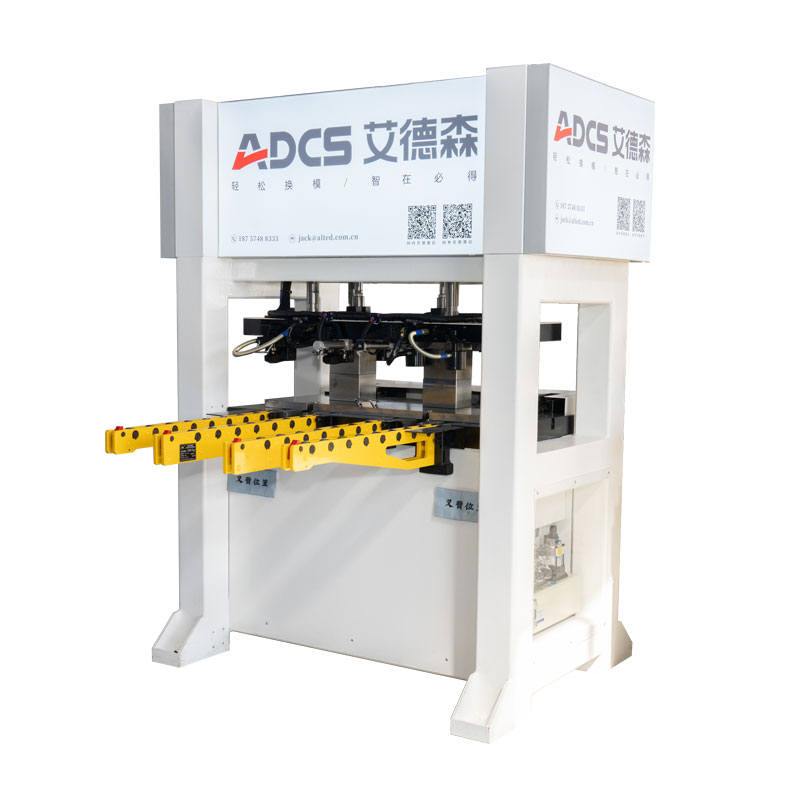
Table of Contents
- Manufacturing Changeover Challenges
- Quick Die Change Equipment Explained
- Core Benefits and Operational Impact
- Considerations for Adoption
- Frequently Asked Questions
- Conclusion & Contact Information
Manufacturing Changeover Challenges
Manufacturers across metal stamping, injection molding, press operations, and forming disciplines regularly confront significant downtime when adjusting tooling. Traditional die setup methods often require multiple operators, manual tightening of clamps, and precise realignment of components. These processes not only consume valuable machine time but also expose workers to risks from lifting, positioning, and securing heavy dies without engineered assistance.
Cumulatively, traditional approaches can result in changeovers that take upwards of 30–60 minutes or more, negatively affecting cycle time, scheduling, and labor allocations. Excessive setup times also contribute to a lack of flexibility when shifting between small batch to mixed product runs, constraining responsiveness to market demand.
Quick Die Change Equipment Explained
Quick Die Change Equipment refers to engineered systems designed to standardize, accelerate, and secure the die change process on stamping presses, power presses, and other production machinery. These systems integrate mechanical elements such as die clamps, lifters, bolster extensions, and control modules to coordinate change operations with minimal manual intervention.:contentReference[oaicite:0]{index=0}
A complete Quick Die Change System typically includes:
- Die Clamps — provide reliable and repeatable clamping force to eliminate manual torque variability.
- Die Lifters — assist in safe die movement into and out of the machine mounting area.
- Bolster Extensions/Die Arms — extend the die outwards for ergonomic loading and unloading.
- Hydraulic or Pneumatic Pump Units — ensure consistent actuation of clamping and release actions.
- Control Panels — centralize changeover sequences and safety interlocks.
By modularizing these elements, the equipment enables production teams to perform changeovers systematically and safely while significantly reducing the number of manual actions required.:contentReference[oaicite:1]{index=1}
Core Benefits and Operational Impact
Understanding the measurable effects of Quick Die Change Equipment is essential when evaluating investment priorities within manufacturing operations. Key performance impacts are outlined below:
| Key Impact Category | Outcomes |
|---|---|
| Setup Time Reduction | Automated guidance and clamping reduce changeover time by up to 80% compared to manual methods.:contentReference[oaicite:2]{index=2} |
| Labor Efficiency | Less reliance on multiple operators for die changes, lowering staffing requirements and reallocating labor to value-add tasks.:contentReference[oaicite:3]{index=3} |
| Safety Performance | Engineered mechanisms reduce risk of injury from lifting and positioning heavy tooling.:contentReference[oaicite:4]{index=4} |
| Production Flexibility | Enables frequent changeovers for mixed production without compromising capacity. |
| Repeatability & Quality | Consistent die placement and clamping improve dimensional accuracy across runs. |
Implementation has shown that production lines once hampered by slow die changes can achieve faster transitions and minimize idle machine time, directly affecting throughput and operational scheduling.:contentReference[oaicite:5]{index=5}
Considerations for Adoption
To successfully integrate Quick Die Change Equipment, manufacturers should address the following factors:
- Standardize Die Interfaces: Ensure consistent die plate dimensions and slot configurations to match clamp and lifter systems.
- Evaluate Automation Levels: Determine whether semi-automatic or fully automated change solutions align with production needs and budget.
- Layout and Access: Assess floor layout and machine accessibility to optimize bolster extension placements and handling paths.
- Training & Safety Protocols: Provide dedicated operator training on using control panels, interlocks, and change sequences.
Appropriate planning at the design and process engineering stages ensures that Quick Die Change Equipment improves operational outcomes rather than simply replacing one change method with another.
Frequently Asked Questions
Q: What differentiates Quick Die Change Equipment from traditional die change methods?
A: Quick Die Change Equipment integrates mechanical features such as engineered die clamps, lifters, and control systems to streamline tooling changes, whereas traditional methods rely on manual tightening, placement, and alignment that are typically slower and more labor intensive.:contentReference[oaicite:6]{index=6}
Q: Can Quick Die Change Equipment improve safety in production?
A: Yes. By reducing manual lifting, climbing, and physical interactions with tooling, systemized die change methods lower the risk of operator injury and support safer workplace procedures.:contentReference[oaicite:7]{index=7}
Q: What kind of return on investment can be expected?
A: Facilities implementing engineered change systems have documented reductions in setup time by up to 80%, with corresponding labor savings and higher machine utilization, often leading to rapid payback periods when measured against lost production time and staffing costs.:contentReference[oaicite:8]{index=8}
Q: Are these systems compatible with all press types?
A: Quick Die Change Equipment can be designed for hydraulic, pneumatic, and mechanical presses. Compatibility depends on machine specifications, die configurations, and production requirements. Customization is commonly offered by solution providers.:contentReference[oaicite:9]{index=9}
Conclusion & Contact Information
Quick Die Change Equipment represents a strategic advancement for manufacturing environments seeking to reduce downtime, enhance safety, and improve operating performance. With engineered components and structured change sequences, production lines can achieve faster transitions between jobs while preserving die integrity and operator well-being.
ADCS manufactures a range of Quick Die Change Systems tailored for press and stamping applications, designed to integrate with existing equipment and elevate operational outcomes. To explore customized solutions, detailed specifications, and implementation support, manufacturers are encouraged to contact us for consultation and project planning assistance.
Send Inquiry


X
We use cookies to offer you a better browsing experience, analyze site traffic and personalize content. By using this site, you agree to our use of cookies.
Privacy Policy