 English
 Español
 Português
 русский
 Français
 日本語
日本語 Deutsch
 tiếng Việt
 Italiano
 Nederlands
 ภาษาไทย
 Polski
 한국어
한국어 Svenska
 magyar
 Malay
Malay বাংলা ভাষার
 Dansk
Dansk Suomi
Suomi हिन्दी

How Much Downtime Can a Quick Die Change System Eliminate From Your Press Operations?
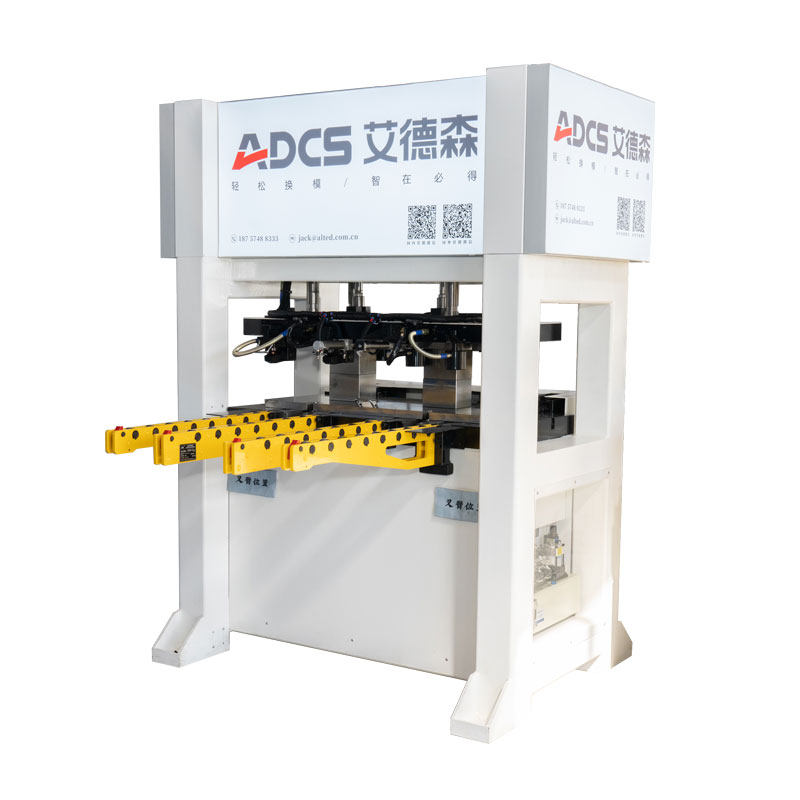
ADCS highlights how a Quick Die Change System can drastically reduce idle time and improve overall workflow on hydraulic and mechanical presses. In modern industrial operations, downtime is one of the most costly inefficiencies for press lines. By minimizing the manual steps traditionally required for die swaps, factories can maintain production momentum and reduce stress on operators.
How it Transforms Operations
It streamlines die swaps with automated trolleys and storage solutions. The technology allows for faster transitions between dies without compromising safety or precision. Key advantages include:
- Reduced machine idle time: Machines spend more time producing, not waiting.
- Enhanced operator safety: Mechanical handling replaces strenuous manual lifting.
- Consistent alignment: Automation ensures die placement is precise every time.
- Adaptability for multiple presses: One system can serve several machines, improving overall plant efficiency.
Practical Applications Across Industries
The benefits of a Quick Die Change System extend beyond speed. Various industries experience tangible improvements:
- Automotive production lines: Rapid die swaps reduce downtime in stamping and assembly operations.
- Plastic and injection molding: Shorter transitions between molds allow for more flexible small-batch runs.
- Metal fabrication: Punch presses and die-casting machines maintain higher throughput.
- Electronics manufacturing: Circuit board production benefits from reduced setup times.
- Home appliance production: Standardized die changes simplify complex assembly lines.
These applications highlight not only time savings but also improved predictability and workflow stability, which are essential for modern production demands.
Quantifying the Time Savings
While every facility varies, industry observations show it can cut die replacement times by 50%–80%. In a facility that traditionally spends 2 hours per die swap, this translates to a saving of 1–1.5 hours per change. Over multiple shifts and several machines, the cumulative effect is substantial.
| Scenario | Traditional Die Change | With Quick Die Change System | Time Saved |
| Small batch injection mold | 90 minutes | 20–30 minutes | 60–70 minutes |
| Hydraulic press die swap | 120 minutes | 25–40 minutes | 80–95 minutes |
| Multi-station production | 45 minutes per station | 10–15 minutes per station | 30 minutes per station |
These numbers underscore the strategic advantage of integrating automated die handling into production workflows.
Beyond Efficiency: Operator Well-Being
Reducing downtime isn't just about production—it directly impacts the workforce. Heavy manual handling and repeated die swaps can cause fatigue and even injury. With automated the Change Systems, operators experience less strain, creating a safer, more sustainable working environment. This factor alone contributes to long-term operational stability and employee satisfaction.
Final Insights
Investing in streamlined die change technology aligns with modern production goals: higher efficiency, better safety, and more predictable output. For facilities seeking measurable reductions in idle time and improved workflow, the Quick Die Change System from ADCS demonstrates a clear, practical solution. By transforming how dies are handled, factories can maximize uptime, optimize labor, and maintain consistent product quality.
The adoption of the Change Systems is increasingly becoming standard in industries where every minute of production counts. The combination of automated storage, precise trolleys, and rapid die alignment ensures that press operations run smoother and safer than ever before.
Previous:No News
Send Inquiry


X
We use cookies to offer you a better browsing experience, analyze site traffic and personalize content. By using this site, you agree to our use of cookies.
Privacy Policy